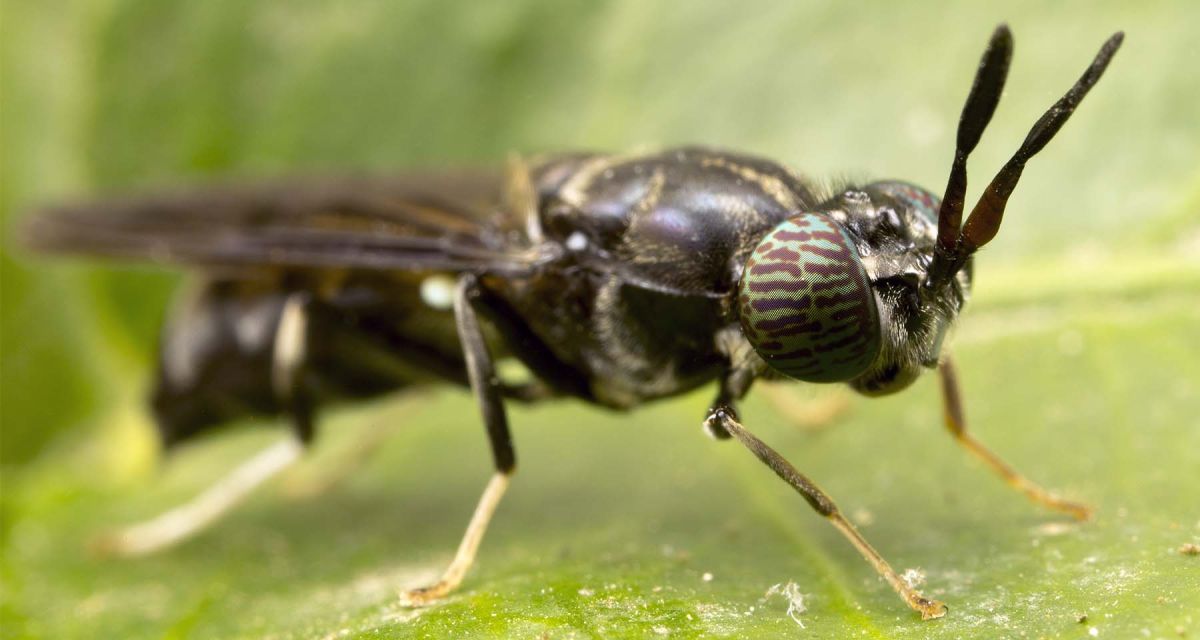
New EuroTier product
WEDA Larvae Belt
With the new Larvae Belt from WEDA Dammann & Westerkamp, insect farming is taking a step forward. The innovative system simplifies and automates larvae fattening. This drastically reduces both labour costs and the need for complex robot technology. Thanks to its innovative modular design, the space utilisation of the fattening system is optimised. It also eliminates recurring high costs for plastic containers and maintenance. These benefits make the system a sustainable and cost-efficient solution.
Previous problems in larval fattening
The traditional larvae fattening system has so far relied on a complex process: Pumpable feed is dispensed into plastic crates, which are then transported on a roller conveyor system. In the next step, the young larvae are added and the crates have to be stacked on pallets again by a robot arm or employees in order to be transported to the main fattening system. This procedure is labour-intensive and costly: one crate is required per dosing process and larval stocking, which costs around 8 euros to purchase. With a daily feeding of 100 tonnes of substrate, around 12,500 crates are required per day. This leads to high costs in terms of both purchase and maintenance. During the fattening period, which lasts around 7 to 10 days, this sum multiplies again
The solution: Larvae Belt
The larvae belt system from WEDA reduces these complex work steps to a fully automated, efficient process. Instead of boxes, the larvae are fattened on open conveyor belts similar to the dry manure belts used in laying hen husbandry. A special channel shape ensures that neither the substrate nor the larvae can fall off the sides. With a filling height of 60 millimetres per belt, around 75 litres of feed substrate are fed per metre and then filled with larvae. The belts are then stopped and the larvae can develop for around 7 to 10 days. The larvae belt is then restarted and the ready- to-harvest larvae fall onto a cross conveyor belt together with the feed, which transfers them to the downstream process step.
Ideally, 6 to 12 larvae belts are mounted on top of each other in an insect production facility, depending on the room height, and several such units are placed next to each other. This creates a kind of rack system as a fattening system with a length of up to around 50 metres.
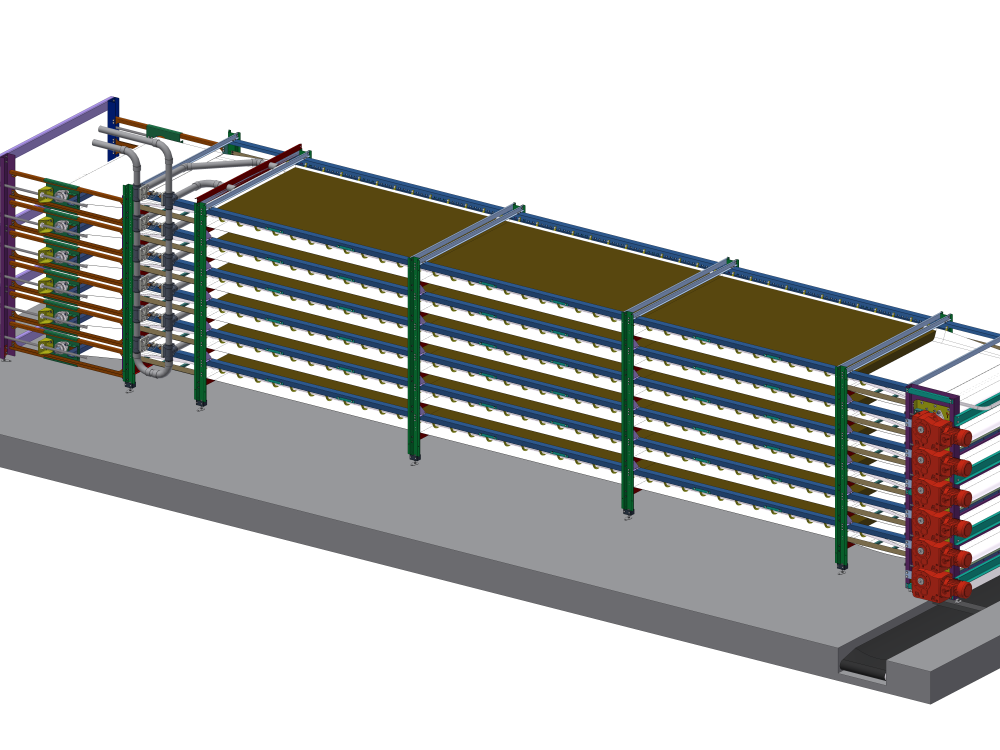
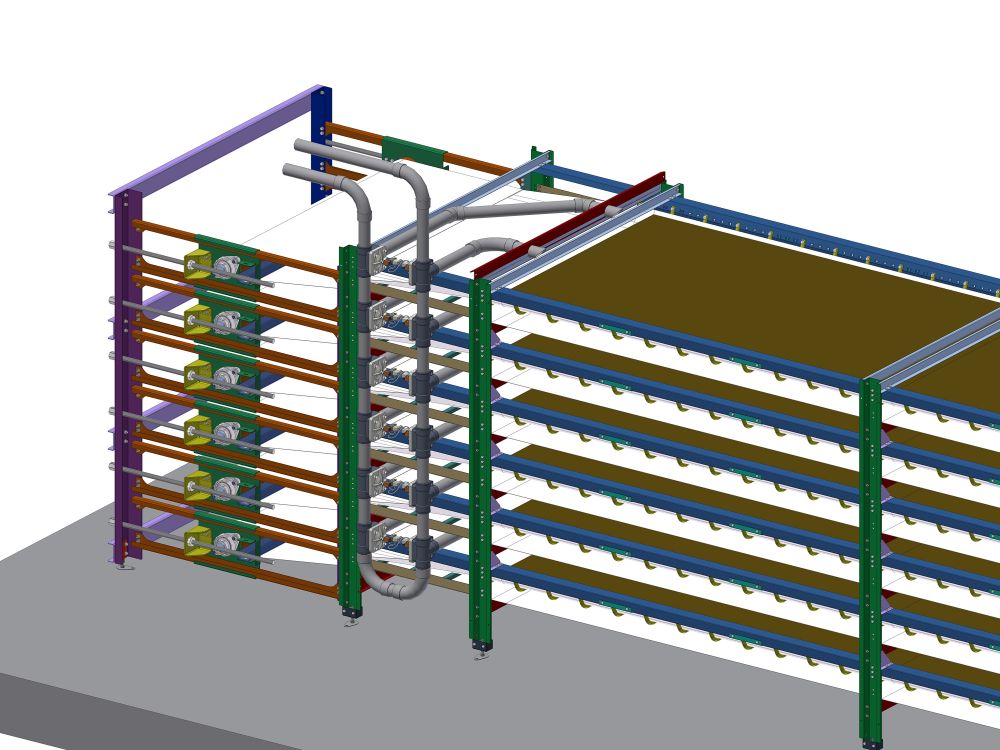
Functionality of the Larvae Belt:
1. Feeding:
The pumpable feed is first fed onto the moving convey- or belt through a dosing valve, whereby the dosing quantity is adapted to the speed of the dosing belt. This ensures that the belt is evenly filled with substrate.
2.Larval stocking:
The young larvae are then conveyed onto the belt. Larvae and substrate cannot fall off due to the special channel shape of the conveyor belt.
3. Mast:
During the fattening phase, the larvae belt is stationary so that the larvae have time to grow. The distance of 30 cm between the belts ensures very good ventilation - the aisle between the ‘rows of shelves’ also serves as an air supply channel.
4. Harvest:
At the end of the fattening period, the belt is restarted and the ready-to-harvest larvae, which were placed at the front at the start of fattening, fall onto a cross conveyor belt for further processing, together with the food.
Advantages of the Larvae Belt system:
- Simplicity and cost efficiency: the design is simple and cost-effective, eliminating high acquisition costs and complex maintenance processes.
- Maximum efficiency per square metre: The system can be built in multiple tiers on top of each other and expanded modularly, allowing for optimal space utilisation.
- Reduced labour costs: No expensive robots or additional employees are required for handling.
- Sustainability: The elimination of plastic crates significantly reduces the amount of plastic waste produced and saves recurring investments of up to 800,000 euros every 2 to 3 years.